Stop Relying on Motivation: How to Make Progress Even When You Don’t Feel Like It
Most productivity advice assumes something unrealistic: that we will feel motivated when it’s time to work.
They were wrong…
Motivation is unpredictable. Some days it’s high and everything feels easy. Other days even simple tasks feel heavy. If our progress depends on motivation, then our productivity becomes inconsistent.
This is why so many people start projects with enthusiasm and then struggle to continue after a few days or weeks. The problem isn’t laziness or lack of commitment. It’s relying on a temporary resource that naturally fluctuates.
Instead of depending on motivation, it’s much more effective to build systems.
Why Motivation Isn’t Reliable
Motivation is influenced by many factors, including energy levels, mood, stress, sleep, previous actions and situations, and even small things like the weather. Because of this, it cannot serve as a stable foundation for long-term work.
When motivation is high, starting tasks feels effortless, difficult things seems easy. When it drops, even beginning a small task can feel difficult, getting out of bed seems exhausting. If we wait for motivation to appear, progress will never move.
This creates a frustrating cycle:
Motivation appears → we work intensely
Motivation fades → progress stops
Over time, this pattern makes projects feel harder than they actually are.
What Works Better: Systems
A system is a repeatable structure that reduces the need to decide what to do and when to do it.
Instead of asking yourself each day “Do I feel motivated enough to start?”, a system answers the question in advance.
And how to build that system? You start small, by building a habit
Building a Habit
If systems are the structure behind productivity, habits are the engine that keeps them running.
A habit is simply an action that becomes automatic through repetition. At the beginning, it requires effort and intention. But over time, it becomes something you do almost without thinking.
Think about brushing your teeth. You probably don’t wait to feel motivated to do it. It’s simply part of your routine.
Work habits can function the same way.
When an action becomes a habit, it no longer depends on motivation. You don’t need to convince yourself to start every time, because the behavior is already part of your daily rhythm.
This is why building small, consistent habits is often more powerful than relying on bursts of motivation.
Instead of asking yourself to work for hours when you feel inspired, focus on repeating a small action regularly, start with something you really want. Over time, that small action becomes easier to start and easier to maintain.
Start Small
One common mistake when trying to build new habits is starting too big.
We imagine an ideal version of ourselves and try to match it immediately:
- writing for two hours every morning
- exercising every day
- drawing a masterpiece
- reading an entire book each week
But large changes require a lot of energy and willpower, which makes them difficult to sustain.
A better approach is to start small enough that the habit feels manageable.
For example:
- Write for 10 minutes
- Read 5 pages
- 5 minutes of exercise three days a week
- Draw a simple sketch
Small actions may seem insignificant, but consistency will make a big difference.
A habit that you repeat every day becomes far more powerful than a large effort that only happens occasionally, and that habit can grow over time to become a large goal that you make effortlessly.
It Might Feel Heavy at First
Starting a new habit can feel surprisingly hard. Even a small action, writing for ten minutes, doing a short stretch, or sketching a quick drawing, might feel like carrying a weight. That’s completely normal. Your brain is adjusting to something new, and your body is learning a new rhythm.
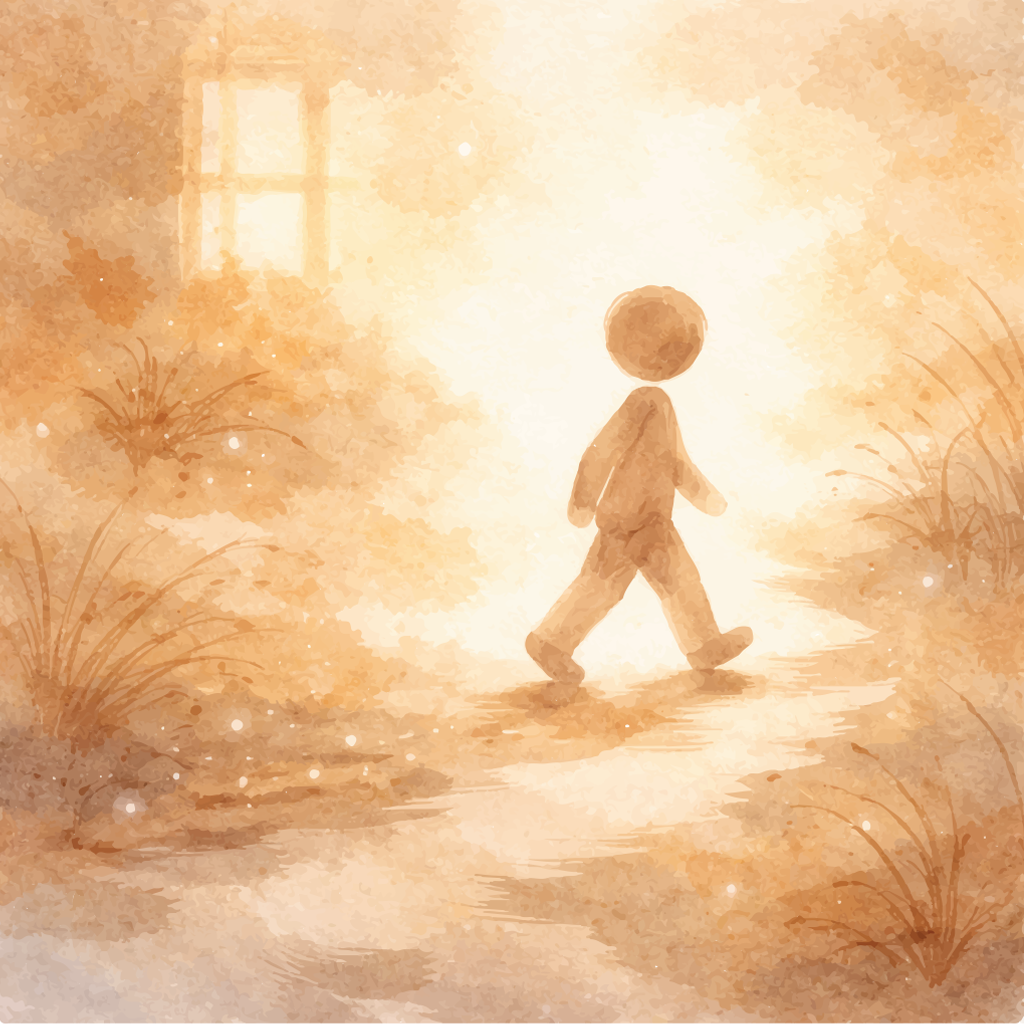
The key is gentle consistency. Each time you repeat the habit, it gets a little easier. What felt heavy yesterday might feel lighter today, and eventually it will become a natural part of your routine, something you do almost without thinking.
Remember: this isn’t a test of willpower. It’s like planting a tiny seed. At first, it takes effort to water and care for it. But with patience, those small, repeated actions grow roots, and the habit begins to flourish on its own.
So when it feels heavy, be kind to yourself, help yourself. Even a single small step is meaningful. Each action is proof that you are building something that will carry you forward, gently and steadily.
Tracking Your Habits
One simple way to support new habits is to track them.
A habit tracker is a visual record of the actions you complete each day. A checklist you can make it on a piece of paper. Each time you follow through on your habit, you mark it.
This might seem like a small thing, but it creates two powerful effects.
First, it makes your progress visible. Instead of feeling like you’re starting from zero every day, you can see the chain of actions you’ve already completed.
Second, it creates a gentle sense of progress. Once you see several days in a row marked on the tracker, you naturally want to continue the streak.
The goal is not perfection. Its just to do your habit for 30 times in 30 days, and repeat.
A Simple Habit Tracker
To make this easier, I created a simple habit tracker printable you can use, hang it, and start tracking!
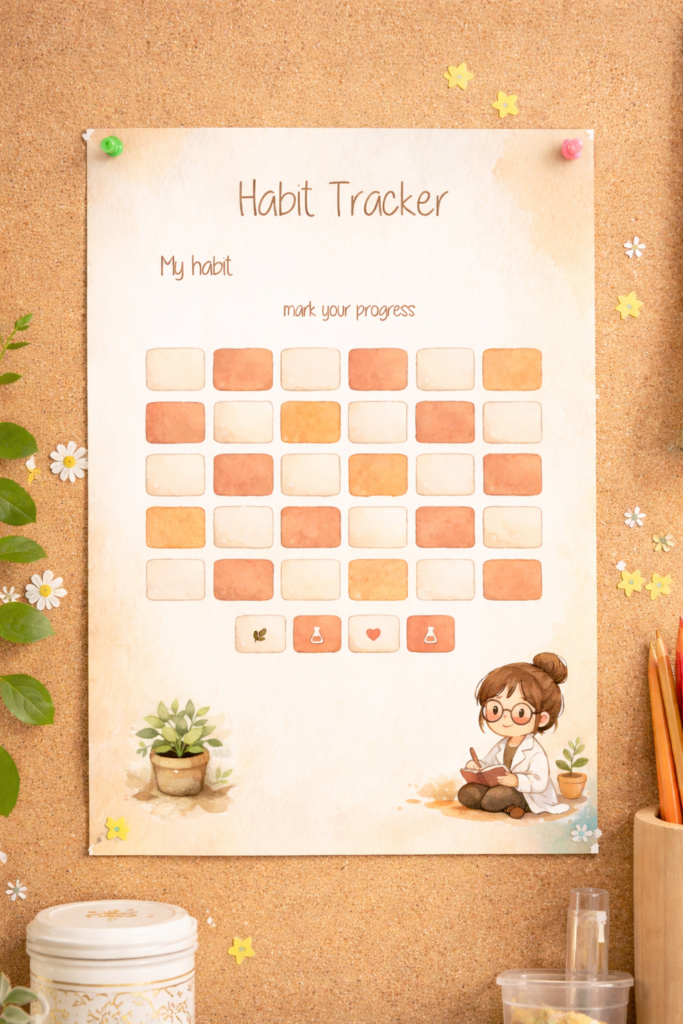
Choose one habit you want to build and mark each day you complete it. Over time, the tracker becomes a small visual reminder that progress doesn’t come from motivation alone, it comes from consistent action.
You can download the printable below and start using it today.
Final Thoughts
Motivation can help you begin a project, but it is rarely strong enough to carry it all the way to completion.
Systems are larger structures. Habits are a small rhythm. Together, they turn small, repeated actions into real progress.
When you combine the two, progress becomes much more reliable, even on days when you don’t feel like working.
And in the long run, it’s those small, repeated actions that make the biggest difference.
Maybe steady, gentle steps, repeated over time,
are how progress quietly grows.
-Lab Keeper 🌸
Leave a Reply